
10 Best Places to Visit in Germany in December (2025 Markets & Alps)

Germany in December isn't about gentle winter sunshine and quiet, reflective moments. It's cold, it gets dark early, and it's absolutely buzzing.
Forget what the brochures say; the real reason to go is for the Christmas markets. They are loud, full of people, and smell incredible. Every city tries to outdo the others with mulled wine, sausages, and handcrafted toys.
This isn't a quiet getaway. It's about diving headfirst into a tradition that Germans take very seriously. So, grab a coat, forget the diet, and prepare to spend a lot of time standing outside with a warm drink.
This list isn't just about the biggest markets. It's a mix of the famous ones you have to see and some other spots that offer something different, from medieval towns to proper mountain scenery.
We're talking about places with character, not just a few sheds selling overpriced trinkets. The goal is to give you a proper taste of what a German winter is all about, beyond the clichés.

1) Nuremberg, Bavaria
Nuremberg is home to the Christkindlesmarkt, arguably one of the most famous Christmas markets in the world.
You can’t miss the opening ceremony when the Christkind recites a prologue from a church balcony. The market itself is a sprawling collection of red-and-white-striped stalls in the city's main square.
Here you'll find classic wooden toys, spicy gingerbread known as Lebkuchen, and the small, grilled Nürnberger sausages.
It’s a full-on sensory experience with choirs singing and the smell of roasting almonds everywhere.
Beyond the market, make sure to walk up to the Imperial Castle for a solid view over the city's rooftops.
FAQs/Things to know before visiting Nuremberg, Bavaria
1. Is the Nuremberg Christkindlesmarkt too crowded?
Yes, it gets incredibly busy, especially on weekends and in the evenings. For a more manageable experience, try visiting on a weekday morning or early afternoon. The crowds are part of the atmosphere, but if you want to browse the stalls properly, off-peak times are much better.
2. What is there to do in Nuremberg besides the Christmas market?
Nuremberg has a lot of history to explore. You can visit the former Nazi Party Rally Grounds and the Documentation Centre for a sobering look at the city's role in the Third Reich. The Imperial Castle offers fantastic views and a glimpse into medieval life.
3. How easy is it to get around Nuremberg?
The Old Town (Altstadt), where the main market is located, is very walkable. Many of the key sights are within the city walls. For longer distances, Nuremberg has an efficient public transport system of trams, buses, and an U-Bahn (underground).

2) Dresden, Saxony
Dresden hosts Germany's oldest Christmas market, the Striezelmarkt, which dates all the way back to 1434.
The market is famous for its giant Christmas pyramid, which you can't miss, and the traditional Stollen fruit bread. You can even see bakers making the official Dresdner Christstollen.
The whole Altstadt (Old Town) gets into the festive spirit, with lights and decorations everywhere. You can find everything from handmade wooden crafts from the nearby Ore Mountains to local pottery and textiles.
It’s a very traditional affair, and the locals are proud of its long history.
The city itself is a great place to explore, even in the cold. The Frauenkirche, a stunning church that was completely rebuilt after being destroyed in World War II, is a must-see. Take the time to climb to the top for a panoramic view of the city and the Elbe River.
FAQs/Things to know before visiting Dresden, Saxony
1. What makes the Dresden Striezelmarkt special?
Its age is a big factor; it's the oldest Christmas market in Germany. This history is reflected in its traditions, like the Stollen Festival and the huge, walk-in wooden pyramid. The market also has a strong focus on regional crafts, especially wooden items from the Ore Mountains.
2. Is Dresden easy to explore in winter?
Absolutely. The main historical centre is compact and easy to walk around. Key sights like the Frauenkirche, Zwinger Palace, and Semperoper are all close to each other. The city also has a good tram system for getting to places further afield. Just be sure to wrap up warm, as it can get very cold standing by the river.
3. What should I buy at the Dresden Christmas market?
Look for authentic handcrafted goods. Wooden nutcrackers, incense smokers (Räuchermänner), and candle arches (Schwibbögen) from the Ore Mountains are classic choices. Also, you can't leave without trying the Dresdner Christstollen, the city's famous fruit bread.

3) Cologne, North Rhine-Westphalia
Cologne doesn't just have one Christmas market; it has several, each with its own distinct theme.
The most famous is the one set against the incredible backdrop of the Cologne Cathedral. It's massive, with a huge Christmas tree and a sea of wooden stalls.
You can also find the "Heinzels Wintermärchen" in the Old Town, which has an ice rink and a fairytale theme that's great if you have kids with you.
Another popular one is the Angel's Market at Neumarkt, with its illuminated stars in the trees.
Exploring the different markets is the main event here. Each one has a different mug for its Glühwein, and collecting them is part of the fun. Beyond the markets, climbing the south tower of the cathedral is a workout but rewards you with an amazing view.
FAQs/Things to know before visiting Cologne, North Rhine-Westphalia
1. Which Cologne Christmas market is the best one to visit?
It really depends on what you're looking for. The market at the cathedral is the most iconic and visually impressive, but also the most crowded. For a more charming and less hectic experience, the market in the Old Town (Heinzels Wintermärchen) is fantastic, especially with its ice rink.
2. How can I avoid the crowds in Cologne during December?
Similar to other big markets, visiting on weekdays is your best bet. The markets are busiest from Friday evening through Sunday. If you can only go on a weekend, try to get there right when they open.
3. What is Cologne's public transport like?
Cologne has an excellent public transport network (KVB) of trams and buses that makes getting between the different Christmas markets and attractions very easy. The city centre is walkable, but a day ticket can be very useful if you're staying further out or want to explore different neighbourhoods.

4) Rothenburg ob der Tauber, Bavaria
If you want to step into what feels like a medieval Christmas card, Rothenburg ob der Tauber is the place.
It's a small, walled town with cobbled streets and half-timbered houses that looks incredible under a dusting of snow.
The Reiterlesmarkt is one of Germany's oldest and most charming Christmas markets. It's not as big as the city markets, but its setting is unbeatable. The whole town feels festive, with decorations on every building.
Make sure to walk the medieval town walls for great views over the rooftops and the surrounding Tauber Valley.
The town is also home to the German Christmas Museum, where you can learn about the history of Christmas traditions.
FAQs/Things to know before visiting Rothenburg ob der Tauber, Bavaria
1. Is Rothenburg ob der Tauber worth visiting if I've been to other German Christmas markets?
Yes, because the experience is completely different. While cities like Nuremberg and Cologne have huge markets, Rothenburg's charm is the town itself. The market is part of the overall medieval atmosphere, not just a standalone event.
2. How long should I spend in Rothenburg ob der Tauber?
You can see the main sights in a full day trip, but staying overnight is highly recommended. The town is much less crowded in the evenings and early mornings after the day-trippers have left.
3. Is it difficult to get to Rothenburg ob der Tauber?
It's a bit more effort than a major city, but manageable. The easiest way is often by car. If you're using public transport, you'll likely need to take a train to a nearby hub like Würzburg or Ansbach and then change to a regional train.

5) Munich, Bavaria
Munich in December is about more than just its famous Christkindlmarkt on Marienplatz.
While that market is a must-see, with the impressive Town Hall as its backdrop, the city offers a lot of variety.
There's a Medieval Christmas Market at Wittelsbacherplatz where you can drink mulled wine from clay goblets. The Tollwood Winter Festival offers a more alternative vibe with its focus on organic food, quirky crafts, and live music.
You can also find a charming little market in the English Garden, complete with an ice-skating rink.
When you need a break from the markets, Munich has plenty to offer. You can explore the vast English Garden, one of the world's largest urban parks, which is beautiful in winter.
FAQs/Things to know before visiting Munich, Bavaria
1. Which is the best Christmas market in Munich?
The main market at Marienplatz is the most traditional and popular, but the Medieval Market at Wittelsbacherplatz offers a unique experience with its historical theme. For something different, the Tollwood Winter Festival is less about traditional Christmas and more about arts, culture, and international food.
2. What is the weather like in Munich in December?
Expect it to be cold. Temperatures often hover around freezing, and snow is quite possible, which adds to the festive atmosphere. You'll need to pack warm layers, a good coat, a hat, gloves, and waterproof boots.
3. Is it easy to take a day trip from Munich to the Alps?
Yes, it's very easy and a great idea. There are regular trains from Munich's main station (Hauptbahnhof) that can get you to places like Garmisch-Partenkirchen in about 90 minutes.

6) Berlin
Berlin's Christmas market scene is as diverse as the city itself. You won't find one single central market, but rather dozens scattered across the city, each with a different character.
The market at Gendarmenmarkt is one of the most beautiful, set between two cathedrals and a concert hall.
For a more traditional feel, the market at Charlottenburg Palace is fantastic. If you want something more lively and modern, the market at Alexanderplatz has fairground rides and a party atmosphere.
December in Berlin is also a great time to explore the city's incredible museums without the summer crowds. A visit to Museum Island is essential.
The city's complex history is on display everywhere, from the Brandenburg Gate to the remnants of the Berlin Wall at the East Side Gallery.
FAQs/Things to know before visiting Berlin
1. With so many Christmas markets, which ones should I visit in Berlin?
For classic beauty, go to Gendarmenmarkt. For a grand, historical setting, choose the market at Charlottenburg Palace. If you're with family or want some fairground fun, Alexanderplatz is a good option.
2. Is Berlin very expensive to visit in December?
Compared to some other major European capitals, Berlin can still be relatively affordable. Accommodation and food prices are generally reasonable, although they will be higher in the most popular tourist areas.
3. How should I dress for a trip to Berlin in winter?
Layers are key. It will be cold, with temperatures often dropping below freezing. You'll need a warm, waterproof or windproof outer jacket, thermal layers, a jumper or fleece, and warm trousers.

7) Hamburg
Hamburg offers a unique Christmas market experience with its maritime flair. The main historical market in front of the impressive City Hall is a must-visit, with its design curated by the Roncalli Circus.
For something a bit different, head to the "White Magic" market on the Jungfernstieg, with its white tents overlooking the Alster lake.
The city also has a famously "naughty" Christmas market in the St. Pauli district, called Santa Pauli, which is definitely for adults only.
When you're not at the markets, explore the Speicherstadt, the largest warehouse district in the world built on oak piles, which is a UNESCO World Heritage site and looks particularly atmospheric on a misty winter day.
FAQs/Things to know before visiting Hamburg
1. What is unique about the Christmas markets in Hamburg?
The variety and the maritime setting make Hamburg stand out. You have the very traditional market at the City Hall, the modern, stylish market on the Jungfernstieg, and the infamous Santa Pauli market in the Reeperbahn district.
2. Is the Santa Pauli Christmas market in Hamburg worth visiting?
If you have an open mind and a sense of humour, absolutely. It's an adults-only market located in the famous Reeperbahn red-light district. You'll find the usual food and drink stalls alongside more risqué gifts and entertainment.
3. What are some good indoor activities in Hamburg for a cold day?
Hamburg has some excellent options. The Miniatur Wunderland is a huge model railway exhibition that's fascinating for all ages. You can also visit the Elbphilharmonie for a tour or a concert.

8) Leipzig, Saxony
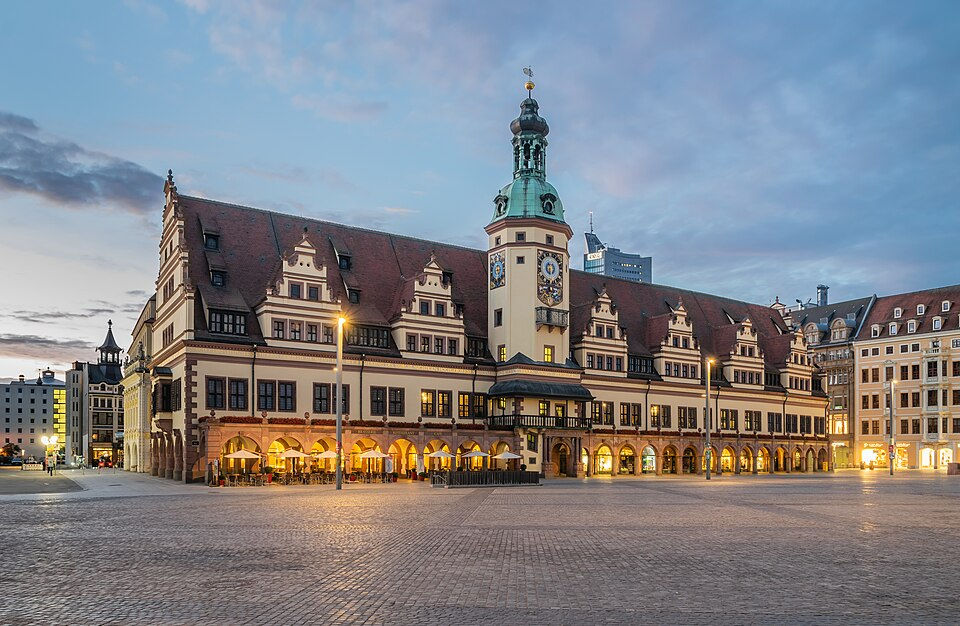
Leipzig's Christmas market is one of the oldest in Germany, dating back to 1458. It takes over the entire historic city centre, with over 300 stalls set against the backdrop of the Old Town Hall.
You can hear traditional trombone concerts from the balcony of the Town Hall and see a large Ferris wheel offering views over the city.
The market also features a Finnish village, where you can try smoked salmon and Glögi, a Nordic mulled wine.
Leipzig has a rich cultural history, particularly its connection to classical music. You can visit St. Thomas Church, where Johann Sebastian Bach worked as a choirmaster.
The city also played a crucial role in the peaceful revolution that led to the fall of the Berlin Wall, and you can learn about this at the "Runde Ecke" Memorial Museum.
FAQs/Things to know before visiting Leipzig, Saxony
1. How does the Leipzig Christmas market compare to Dresden's?
While Dresden's Striezelmarkt is more famous, Leipzig's market is just as old and impressive, and some find it a bit less crowded. It has a very traditional atmosphere, with a focus on music, which reflects the city's heritage.
2. Is Leipzig a good city for a weekend trip?
Leipzig is perfect for a weekend break. The city centre is very compact and walkable, so you can easily see the main sights and enjoy the Christmas market in two or three days. It has a great mix of history, music, culture, and a lively modern arts scene. It's also well-connected by train to other major German cities like Berlin.
3. What is the musical heritage of Leipzig I should explore?
Leipzig is known as the "City of Music." It was home to famous composers like Bach, Wagner, and Mendelssohn. You should visit the St. Thomas Church, where Bach worked and is now buried. The Bach Museum is right next door.
9) Garmisch-Partenkirchen, Bavaria
If you're looking for a proper winter wonderland experience with snow and mountains, head to Garmisch-Partenkirchen.
This town in the Bavarian Alps offers a more relaxed, traditional Christmas market experience. The focus here is less on huge crowds and more on a cosy, alpine atmosphere.
You can browse stalls selling local crafts and food with the stunning backdrop of Germany's highest mountain, the Zugspitze.
The main reason to come here in December is for the winter sports. The ski season usually kicks off this month, and you can go skiing, snowboarding, or tobogganing. There are also many cleared winter hiking trails with incredible views.
FAQs/Things to know before visiting Garmisch-Partenkirchen, Bavaria
1. Do I need to be a skier to enjoy Garmisch-Partenkirchen in December?
Not at all. While it's a world-class ski destination, there's plenty for non-skiers. You can go winter hiking on prepared trails, try snowshoeing, or go ice skating. The trip up to the Zugspitze summit is an amazing experience for anyone, and the Partnach Gorge winter walk is stunning. It's a great destination for simply enjoying the alpine scenery.
2. Is snow guaranteed in Garmisch-Partenkirchen in December?
In the town itself, snow is likely but not absolutely guaranteed, especially early in the month. However, on the surrounding mountains, like the Zugspitze plateau, you will almost certainly find snow.
3. How do I get to the top of the Zugspitze?
You have two main options. You can take the historic cogwheel train (Zahnradbahn) from Garmisch-Partenkirchen all the way to the Zugspitzplatt glacier. From there, a short cable car ride takes you to the summit.
10) The Black Forest (Schwarzwald)
The Black Forest offers a completely different kind of December trip. It's less about a single big city market and more about scenic drives and charming small towns.
The region is known for its dense forests, cuckoo clocks, and picturesque villages that look magical under a blanket of snow.
A great base for exploring is the town of Freiburg, which has a lovely Christmas market of its own in a beautiful historical setting.
From Freiburg, you can take day trips to places like the Ravenna Gorge Christmas market, which is uniquely located underneath a stone viaduct.
You can also visit Triberg, famous for its waterfalls (which can be frozen in winter) and for being the heart of cuckoo clock country.
FAQs/Things to know before visiting The Black Forest (Schwarzwald)
1. What's the best way to get around the Black Forest in winter?
Renting a car is the most flexible way to explore the small towns and scenic roads of the Black Forest. Roads are generally well-maintained, but winter tyres are essential and sometimes required by law. If you prefer not to drive, you can use the region's efficient train and bus network.
2. Is the Ravenna Gorge Christmas market in the Black Forest worth the trip?
Yes, it's one of the most unique and atmospheric Christmas markets in Germany. Its location in a deep gorge under the illuminated arches of a railway viaduct is truly special. It's a small market with a focus on high-quality local crafts and food.
3. What are some classic Black Forest foods to try?
You absolutely have to try Black Forest Gateau (Schwarzwälder Kirschtorte) in its home region. Also look out for smoked ham (Schwarzwälder Schinken). For a hearty meal, try Käsespätzle (a type of cheesy pasta) or Flammkuchen (a thin, crispy pizza-like dish).

So there you have it. Germany in December is an experience, but it requires a bit of planning.
The main thing to remember is to book your trains and accommodation well in advance, especially if you're heading to the big-name markets like Nuremberg or Cologne. Things get booked up months ahead, and prices will shoot up if you leave it to the last minute.
Also, don't underestimate the cold. Pack proper warm clothes – layers, hats, gloves, the lot. You'll be spending a lot of time outdoors, and being cold is a quick way to ruin the fun.
When exploring these hidden gems, always consider hiring a guide or joining a tour group, as some locations may require local expertise for the best experience.
Did you know we have a Hidden Gem Finder on our website? This handy little map shows over 13,000 hidden gems across the entire world with their exact co-ordinates available to view on Google Maps as well as an image/description for each one!

Comments