
Best Places to Visit in the Community of Madrid in March

Written by Our Hidden Earth Editorial Team
Last updated 23 October 2026
Summary: March offers a varied introduction to the Community of Madrid, where mild lowland temperatures encourage exploration of historical towns like Alcalá de Henares and Aranjuez, while the higher reaches of the Sierra de Guadarrama retain a cool, seasonal character suitable for hiking and observation rather than typical spring recreation.
Our Hidden Earth maps 300,000+ verified hidden gems across 230 countries. Open the map to find the quiet places near the ones below.
The Community of Madrid in March: at a glance
Explore the historic university grounds and Cervantes-related sites in the town of Alcalá de Henares.
Tour the expansive royal gardens and palace interiors in the southern town of Aranjuez.
Visit the granite landscapes and mountainous hiking trails of the Sierra de Guadarrama.
Plan for layered clothing to accommodate temperature differences between the low-lying basin and elevated northern peaks.
Is March a good time to visit the Community of Madrid?
March serves as a transitional month in the region, offering a balance between the quiet of the winter months and the increasing activity that precedes the summer season. It is a suitable time for travellers who prefer to explore historical monuments, urban heritage sites and formal gardens without the intense heat common in the later months of the year.
While the weather is generally milder than in mid-winter, the region experiences variable conditions, and visitors should be prepared for the possibility of intermittent rainfall or sharp temperature drops, particularly in the mountainous areas located to the north.
Weather in the Community of Madrid in March
The climate in March is defined by the region's geographical diversity. The central basin, where the capital city sits, often experiences moderate daytime temperatures that feel pleasant when the sun is out, though nights remain chilly.
As you move towards the north into the Sierra de Guadarrama, the elevation causes a noticeable decrease in temperature; snow may still be present on the higher peaks or ridges during this time. Conversely, the southern plains near Aranjuez tend to benefit from slightly warmer, sheltered conditions.
The weather is rarely uniform across the entire territory, making it essential for travellers to monitor local forecasts for specific municipalities rather than relying on a single regional outlook.
Best places to visit in the Community of Madrid in March
1. Alcalá de Henares
Located to the east of the capital, this city is recognised for its historical university and as the birthplace of Miguel de Cervantes. In March, the town's compact historical centre is ideal for walking tours, allowing visitors to view the ornate facades of the university buildings and the plazas that define its traditional layout.
The local atmosphere is academic and calm, offering a different pace compared to the surrounding metropolitan sprawl. Visitors can spend the day exploring the various historical museums and reading rooms before enjoying regional dishes in the established taverns that cluster around the central Plaza de Cervantes.
2. Aranjuez
Situated in the south, Aranjuez is known for its royal heritage and the extensive gardens that flank the Tagus River. March is a quiet time to walk through the Prince’s Garden, where the early signs of spring are visible, though the full canopy of the trees is still developing.
The Royal Palace provides an opportunity to view interior historical collections without the demand of the summer months. The town itself is laid out in a grid pattern designed for royal leisure, and its riverside walkways are accessible for those looking for gentle outdoor activity away from the bustle of the city.
3. Chinchón
This town is frequently visited for its unique circular main square, known as the Plaza Mayor, which is ringed by three-storey houses with wooden balconies. In March, the square serves as the focal point for local social life.
The town’s narrow, steep streets and historical architecture provide a distinct experience of the Castilian countryside. Visitors can sample local aniseed spirits and traditional stews, which are particularly appropriate for the cool March weather.
It is a sensible destination for those looking for a small-town atmosphere that maintains a strong connection to its agricultural and viticultural roots.
4. Manzanares el Real
Positioned at the base of the Sierra de Guadarrama, this town is dominated by its well-preserved 15th-century castle. March offers a chance to explore the castle's fortifications and historical exhibits before the peak season begins.
The town serves as a common gateway for those interested in the surrounding granite outcrops, such as La Pedriza. Even if the higher mountain trails are restricted by weather, the lower paths near the reservoir provide accessible walking opportunities with views of the mountain peaks.
It is a functional base for visitors who want to combine historical sightseeing with outdoor exploration.
5. San Lorenzo de El Escorial
This mountain-side town is dominated by the vast Monastery of El Escorial, a significant historical site that houses both a palace and a royal mausoleum. Given its higher altitude, March in this area can be noticeably cooler than in the southern plains.
Visitors spend much of their time indoors exploring the monastery's architecture and extensive art collections. The surrounding Herrería forest provides walking trails that offer clear views of the valley.
It is a recommended destination for those interested in history and architecture who do not mind the variable conditions often found in the foothills of the Sierra.
6. Buitrago del Lozoya
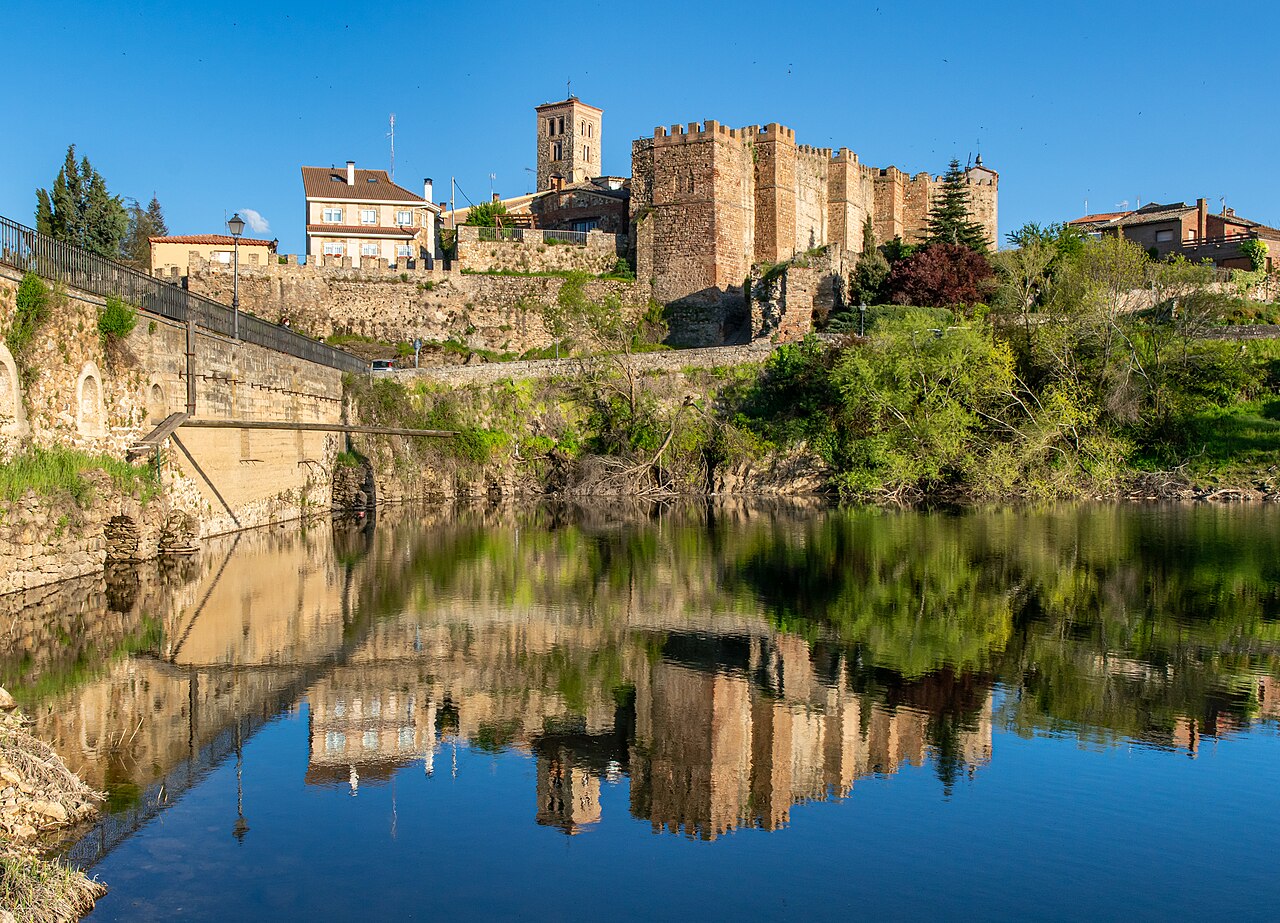
Located in the northern part of the community, this town is notable for its medieval walls that circle a small hilltop promontory. The Lozoya River bends around the town, creating a natural moat. In March, the area is quiet and offers a traditional, rural character.
A walk around the exterior walls provides a sense of the town's defensive history. It is a destination suited for travellers looking to experience a quieter side of the region, far from the metropolitan centre, where the focus is on historical remnants and the surrounding river valley landscape.
7. Patones de Arriba
This is a preserved village known for its distinctive black architecture, where buildings are constructed using local slate. The village is set into a hillside and is pedestrian-only, requiring visitors to walk up from the lower, more modern settlement of Patones.
March is a peaceful time to navigate the stone pathways, as the village remains largely unchanged by modern development. It offers a unique look at rural construction methods.
This trip is best suited for those who appreciate architecture and want to spend a day in a location where the primary activity is walking through the historical settlement.
8. Rascafría
Situated in the upper Lozoya Valley, this town is surrounded by mountainous terrain. It is the site of the Monasterio de Santa María de El Paular, a structure with extensive grounds that invite exploration.
March may see lingering cold, particularly in the mornings, but the valley provides beautiful scenery as the landscape begins its slow transition. The area is popular for those interested in nature, though visitors should remain on marked paths and be prepared for cool, wet conditions in the valley floor.
It is a prime choice for travellers focused on rural heritage and quiet mountain environments.
9. Cercedilla
As a traditional mountain town, Cercedilla functions as a starting point for various hiking routes into the Sierra de Guadarrama. In March, hikers should verify the conditions of higher-altitude paths, as snow or ice may still affect trail safety.
Lower trails through the pine forests remain active and provide an opportunity to experience the mountain air. The town itself has a history related to summer retreats, but in March, it maintains a local, grounded atmosphere.
It is suitable for those who wish to engage with the natural environment while remaining within easy reach of transport connections to the capital.
10. Nuevo Baztán
This town is a planned settlement from the 18th century, created as an industrial hub for local manufacturing. Its architecture is remarkably uniform, reflecting the Enlightenment ideals of its founder. The palace and the central plaza are the core of the town, which is now largely residential.
For a visitor, it represents a specific historical moment in urban design that differs from the organic growth of other local towns. It is a short, focused visit that works well for those with a specific interest in history or architectural planning who have their own transport.
How to plan your Community of Madrid trip
To plan your trip, focus on grouping destinations by their geographic location to minimise travel time. For those staying in the capital, northern towns like Manzanares el Real and San Lorenzo de El Escorial are accessible for day trips.
Southern and eastern destinations like Aranjuez, Chinchón and Alcalá de Henares can each be visited in a day, often utilising regional bus or train networks. A car is recommended for reaching the smaller, more isolated rural settlements such as Patones de Arriba or those deeper in the Sierra de Guadarrama, where public transport frequency may be lower.
Pack for a range of conditions, including a waterproof jacket, sturdy walking shoes for uneven terrain and layers that can be adjusted as you move between indoor historical sites and outdoor environments.
Frequently asked questions
Is it possible to visit the Sierra de Guadarrama in March?
Yes, but you must remain aware of conditions. While lower-elevation trails are usually clear, higher peaks can still hold snow or ice. Check the status of specific routes before starting, and ensure you have appropriate footwear and clothing for sudden temperature shifts common in mountainous environments.
Are the historical sites in Madrid towns open in March?
Most major sites, such as the monastery at San Lorenzo de El Escorial or the royal palace in Aranjuez, maintain consistent opening schedules throughout the year. However, it is always wise to review official websites for any recurring maintenance closures or changes to operating hours before setting out for your trip.
Do I need a car to travel around the community?
Public transport serves the larger towns like Alcalá de Henares and Aranjuez effectively. However, if your itinerary includes visiting multiple smaller villages or remote mountain areas in a single day, a car offers much greater flexibility and is often necessary to reach less connected locations on your own schedule.
Is March considered a busy time for tourism in the region?
March is generally quieter than the peak summer months. While popular locations near the capital may see activity during weekends, mid-week travel usually allows for a more relaxed experience. You are less likely to encounter the large visitor groups that characterise the height of the summer season.
What should I pack for a March trip to Madrid?
The key is versatility. Pack layers that include a medium-weight jacket, sweaters, and comfortable trousers. Because of the variable weather, include a reliable waterproof jacket.
Sturdy, comfortable walking shoes are essential, as you will likely spend much of your time on foot in historical town centres or nature paths.
How does the weather in the south differ from the north?
The south, particularly around Aranjuez, tends to be lower in elevation and thus marginally warmer. The northern region, characterised by the Sierra de Guadarrama, is significantly higher and experiences much colder temperatures, with a higher likelihood of lingering frost or precipitation throughout the month of March.
Is one day enough to see these towns?
Most towns listed can be explored comfortably in a single day. If you have an interest in deep history, such as the monastery in El Escorial, you might prefer to allocate more time to that specific area. Focusing on one major destination per day is a sensible way to manage travel.
Can I combine mountain hiking with city visits?
Yes, by basing yourself in or near the capital, you have access to regional transport that connects to both the northern mountain foothills and the historic eastern and southern plains. This allows you to alternate between indoor historical explorations and outdoor nature-focused activities throughout your stay.
Final thoughts
For a trip in March, focus on a blend of historical towns and mountain foothills to see the best of the Community of Madrid. Choose Alcalá de Henares or Aranjuez if you prefer mild, walkable historical centres and royal gardens, or head to Manzanares el Real if you wish to combine regional history with mountain views and accessible nature trails.
Weather, opening times and transport details in this guide were correct as far as we could check. Always confirm directly before you travel.
Planning a March trip? The Our Hidden Earth map has 300,000+ verified hidden gems across 230 countries. Find the quiet places near wherever you are heading.
Related Guides
More guides to Spain.